From Blossom to Basket: The Orchard-to-Market Journey in England
From the very first spring blossom to the final sale at a street market, an English apple or pear passes through a surprisingly intricate chain of decisions, hands, and technologies. The “orchard-to-market” journey blends traditional rural skills with modern science and logistics, shaped by England’s climate, heritage, and consumer expectations.
1. Blossom and Pollination
The journey begins in early spring. Apple and pear trees in English orchards burst into blossom, their timing tuned to the cool, temperate climate.
- Varieties and rootstocks: Growers choose varieties—such as Cox, Bramley, Conference or Comice—and rootstocks that balance flavour, disease resistance, and tree size. Dwarfing rootstocks allow higher-density planting and easier picking.
- Pollination partners: Most dessert apples and pears need cross‑pollination, so orchards are planned with compatible varieties flowering at the same time.
- Bees and biodiversity: Managed honeybee hives and wild pollinators (bumblebees, solitary bees, hoverflies) are crucial. Many English growers create wildflower margins, hedgerows, and nesting habitats to support them.
- Frost risk management: Late frosts can destroy blossom. Growers monitor forecasts closely, sometimes using wind machines, overhead sprinklers, or even simple orchard smudge pots and fire‑pots to fend off freezing temperatures in the coldest districts.
Once blossom is pollinated and petals fall, tiny fruitlets begin to form.
2. Setting Fruit and Orchard Management
Through late spring and early summer, growers focus on nurturing those young fruits while protecting both yield and quality.
Thinning
Trees often set more fruit than they can develop properly.
- Hand thinning: Workers remove excess fruitlets by hand, improving size and uniformity.
- Chemical thinning: In some cases, regulated sprays are applied at very specific growth stages to reduce fruit load.
- Benefits: Thinning helps achieve consistent calibre, reduces branch breakage, and improves colour and sugar development.
Nutrition and Soil Care
Healthy soil translates into healthy fruit.
- Soil testing: Regular analysis guides fertiliser programmes—nitrogen, potassium, magnesium, and trace elements are balanced carefully.
- Organic matter: Compost, green manures, and mulches improve structure and moisture retention, important in both dry summers and intense rainfall.
- Grass and alleyways: Grass swards between rows prevent erosion and support beneficial insects, but must be managed to avoid competition for water and nutrients.
Pest and Disease Management
England’s relatively moist climate favours fungal diseases, so protection is essential.
- Common issues: Apple scab, powdery mildew, canker, codling moth, and aphids are among the main threats.
- Integrated Pest Management (IPM):
- Monitoring with pheromone traps and field scouting.
- Biological controls, such as predatory mites and parasitoid wasps.
- Resistant varieties and pruning for better airflow.
- Targeted, minimal use of crop protection products, often with weather‑based decision tools.
3. Ripening and Pre‑Harvest Decisions
As summer turns to early autumn, fruit swell and colour up. Timing harvest correctly is one of the grower’s most technical tasks.
- Maturity testing:
- Starch breakdown tests in apples.
- Firmness measurements using penetrometers.
- Sugar levels measured with refractometers (Brix).
- Background colour and seed colour as visual cues.
- End‑use matters:
- Fresh‑eating apples need a balance of crispness, sweetness, and acidity.
- Cooking apples can be picked slightly earlier for firmness and tartness.
- Fruit destined for long storage is often harvested a little less ripe to maintain keeping quality.
Weather just before harvest is critical. Prolonged rain can increase disease risk and cause splitting, while a period of warm days and cool nights helps colour development, particularly in red varieties.
4. Harvest: From Tree to Bin
Harvest in England typically runs from late August through October, depending on variety and region.
Picking
- Hand harvesting: Most quality dessert fruit is still picked by hand to avoid bruising. Pickers twist apples upward to detach them with the stem intact.
- Selective passes: The same tree may be visited two or three times as fruit ripens unevenly within the canopy.
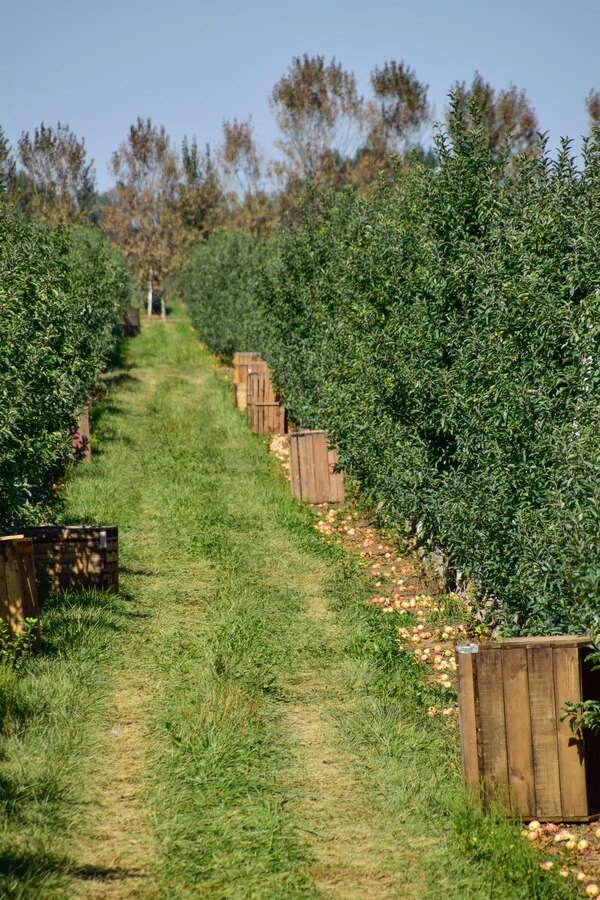
- Field crates and bins: Fruit goes into lined picking bags and then into large wooden or plastic bins to minimise damage.
Labour
Harvest is labour‑intensive.
- Seasonal workers: Farms rely on seasonal labour, often from abroad, coordinated through temporary visa schemes.
- Training and supervision: Workers are trained to identify correct maturity and to handle fruit carefully, as even small bruises may only become visible later in the supply chain.
5. Grading, Packing, and Quality Control
Once bins leave the orchard, they typically go to a packhouse—sometimes on‑farm, sometimes centralised—where the fruit is cleaned, sorted, and prepared for storage or immediate sale.
Intake and Pre‑Cooling
- Rapid cooling: Bringing fruit temperature down quickly slows respiration and extends shelf life.
- Sampling: Quality controllers check for defects, size distribution, sugar and acidity, and potential storage disorders.
Washing and Drying
- Gentle washing removes dust and field residues.
- Drying tunnels or air knives prevent moisture remaining on the skin, which could encourage storage diseases.
Grading
Modern packhouses in England increasingly use automated systems.
- Optical sorters assess size, colour, shape, and external blemishes.
- Weight grading ensures packs are consistent and meet supermarket specifications.
- Internal quality checks sometimes use non‑destructive technologies (e.g., near‑infrared) to detect internal browning or watercore in apples.
Fruit is divided into categories:
- Class I / Premium: Near‑perfect fruit for supermarkets and export.
- Class II: Slight cosmetic imperfections, often for local markets or value lines.
- Processing grade: For juice, cider, sauces, chutneys, or cooking ingredients.
Packing Formats
Packing is tailored to different customers and markets:
- Retail packs: Flow‑wrapped trays, punnets, paper or plastic bags, and increasingly recyclable or minimal packaging.
- Loose fruit: Crates or bins sent to retailers or wholesalers to be sold loose on shelves or market stalls.
- Foodservice and processors: Bulk boxes or bins, with less emphasis on visual perfection.
6. Cold Storage and Controlled Atmosphere
One of the quiet revolutions in the English fruit industry is the ability to offer home‑grown apples for much of the year, long after harvest.
Conventional Cold Stores
- Temperature: Typically just above freezing for apples, slightly warmer for some pear varieties.
- Humidity: Kept high to prevent shrivelling while avoiding condensation.
Controlled Atmosphere (CA) and Ultra‑Low Oxygen (ULO)
- Gas composition: Oxygen levels are reduced, and carbon dioxide controlled, slowing down ripening and preserving firmness and flavour.
- Sealed rooms: Fruit enters these stores soon after harvest and can remain there for many months.
- Monitoring: Sensors track conditions constantly; opening a store is a deliberate decision, as the atmosphere must be carefully rebalanced.
Different varieties have different storage windows. For example, some early apples are best eaten within weeks, while others can be held until late spring or early summer.
7. Logistics: Moving Fruit Through the Supply Chain
From packhouses and stores, fruit is dispatched to various buyers in a temperature‑controlled chain.
Retail Supply Chains
For the major supermarket chains:
- Central distribution: Fruit is delivered in pallets to regional distribution centres.
- Just‑in‑time deliveries: Orders are often based on daily sales data, requiring accurate forecasting.
- Specification‑driven: Size, colour, sugar levels, blemish limits, and even stem length may be defined in retailer specifications.
Wholesale Markets and Independent Retailers
Wholesale markets in cities like London, Birmingham or Manchester act as hubs.
- Wholesalers buy from packers, co‑operatives, or directly from farms.
- Independent greengrocers, restaurants, and caterers source from these markets, often favouring seasonal English fruit when available.
Direct‑to‑Consumer and Short Supply Chains
Many English orchards maintain shorter, more personal routes to market:
- Farm shops and honesty boxes at the orchard gate.
- Pick‑Your‑Own (PYO) operations, where consumers harvest fruit themselves.
- Local veg boxes and community‑supported agriculture (CSA) schemes.
- Farmers’ markets in towns and cities, offering varieties and grades rarely seen in supermarkets.
These routes often highlight heritage varieties and emphasise locality and freshness.
8. At Market: Presentation, Story, and Consumer Choice
When the fruit finally reaches the market—whether a supermarket aisle or a village square—presentation and narrative matter.
- Labelling and assurance schemes: Marks such as Red Tractor and LEAF Marque signal standards in traceability, environmental care, and food safety. Some fruit also carries regional branding (e.g., Kentish apples).
- Variety naming: English consumers increasingly recognise and seek out specific varieties for particular uses—Bramley for baking, Gala for snacking, Conference for poaching.
- Seasonality messaging: Retailers may promote “British apple season,” linking displays to autumn and harvest traditions, while smaller outlets and markets highlight the very short windows of unusual or heritage cultivars.
At traditional street markets, the interaction is more personal. Stallholders talk directly with customers about flavour, texture, and best uses—an oral link back to the grower and the orchard.
9. Sustainability and Changing Pressures
The orchard‑to‑market chain in England is being reshaped by environmental and economic pressures.
Climate Change
- Unpredictable frosts, heavier rainfall, and heatwaves disrupt flowering, fruit set, and quality.
- New pests and diseases may arrive or become more prevalent.
- Growers respond with:
- More resilient varieties and rootstocks.
- Protective netting and frost‑protection strategies.
- Enhanced water management and irrigation where necessary.
Environmental Stewardship
- Agri‑environment schemes encourage hedgerow management, wildflower strips, and reduced pesticide inputs.
- Many orchards are significant wildlife habitats, supporting birds, bats, insects, and wild plants.
Waste Reduction and By‑Products
- Grading losses are increasingly diverted to juice, cider, vinegar, purees, and animal feed, rather than discarded.
- Some farms collaborate with local press houses and cider makers, turning imperfect fruit into value‑added products.
10. Tradition, Heritage, and the Future
Orcharding in England has deep roots—historic county varieties, wassailing customs, and village cider presses all tell a cultural story. Yet the modern journey from blossom to basket also relies on data, sensors, robotics, and sophisticated logistics.
- Heritage and diversity: Conservation projects and community orchards preserve old varieties and traditional orchard landscapes, while commercial growers experiment with new cultivars to suit changing tastes and climates.
- Technology: Drones for canopy imaging, precision sprayers, and even robotic harvesters are beginning to appear, promising greater efficiency but raising new questions about labour and investment.
- Consumer expectations: Demand for local, seasonal, and sustainably grown fruit aligns well with English orchards—if supply chains can remain economically viable under competitive global pressure.
From the moment a bee brushes pollen across a delicate blossom in April to the moment someone selects a crisp apple from a market stall in October, there is an unbroken chain of choices, skills, and care. The English orchard‑to‑market journey is both an old story and an evolving one, rooted in place yet shaped by global forces, with every bite of fruit carrying traces of that complex path.